The capital of Kashkadarya
The Kashkadarya Valley was inhabited by humans as early as the Stone Age. This is evidenced by finds of flint tools dating to the Middle Paleolithic period (100,000–40,000 years ago), discovered in the areas of Kitab, the Takhtakaracha Pass, and the Tankhasdarya Valley. Of great interest are also the rock carvings of prehistoric people that have been studied in the spurs of the Zarafshan Range.
The history of the Karshi Oasis, like that of the city of Karshi itself, cannot be considered in isolation from the past of the Kashkadarya Valley, which formed the southern part of Sogdiana.
Recently, in 2007, Karshi celebrated its 2,700th anniversary. The city is considered one of the most ancient cities in Uzbekistan. In the past, it was known as Nasaf and served as a military, cultural, and trading center of Sogdiana. Favorably located in the Karshi Oasis on the banks of the Kashkadarya River, the city attracted the attention of enemies and was therefore repeatedly captured and destroyed by numerous conquerors, yet it rose quickly from its ruins each time. The city acquired its present name, Karshi, in the early 14th century. During the rule of the Shaybanid dynasty in the 16th century—a period regarded as the city’s golden age—remarkable architectural monuments were constructed, some of which have survived to the present day.
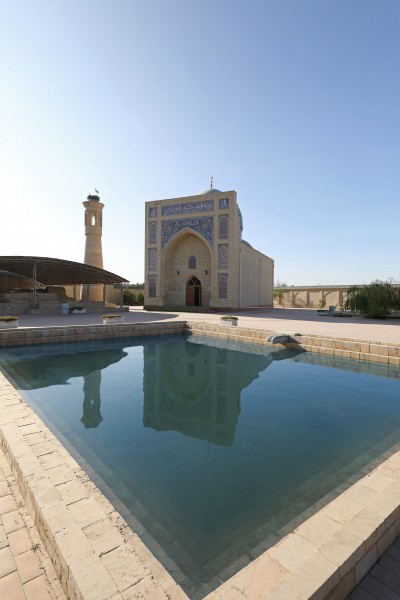
In addition to the ancient settlement of Erkurgan, the historical landmarks of Karshi include the Odina Madrasa (16th century); the Kok Gumbaz (16th century), Bekmir (16th century), Kilichboy, Khoja Qurban, Magzon, and Charmgar mosques (19th–20th centuries); the brick bridge over the Kashkadarya River (16th century); and the Sardoba water reservoir (16th century).
The Odina Madrasa was the only educational institution for women ever built in this region. It was constructed in the 16th century on the site of a khan’s palace. Today, the former madrasa houses a small museum.
Several ancient mosques have been preserved in Karshi, including Kok Gumbaz, Bekmir, Kilichboy, Magzon, and others. Their age exceeds three centuries.
Among the well-known tourist attractions are the famous Karshi bathhouses, which, according to legend, were heated by the flame of a single candle.
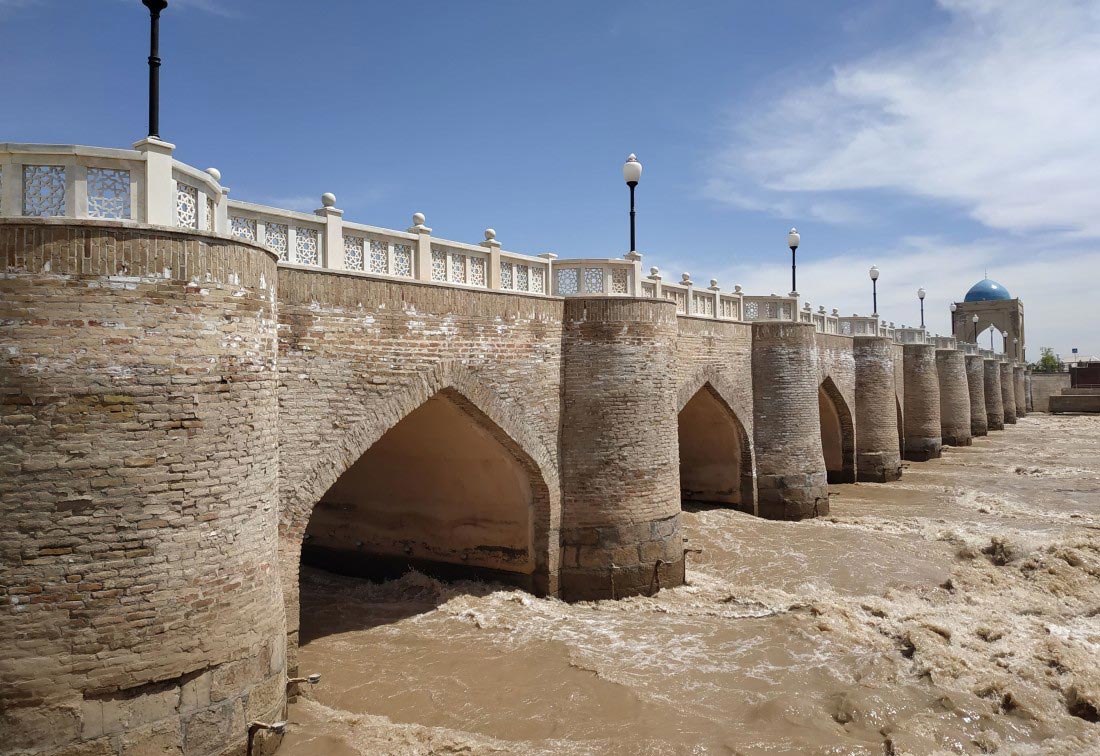
One of Karshi’s notable landmarks is a unique structure—a brick bridge spanning the Kashkadarya River. The bridge is 120 meters long, 8 meters wide, and rises more than 5 meters above the water. It was built in the 16th century during the rule of the Shaybanid dynasty.
Another interesting structure in Karshi is the Sardoba, a special domed construction that was traditionally used for water storage in this arid region. Similar structures can also be found in the surroundings of the city. Chronic water shortages forced local residents to dig deep wells. For example, in the village of Kamuk, located on the border of the Kashkadarya степpe, a hand-dug well 97 meters deep has survived in excellent condition to this day.
Erkurgan Ancient Settlement
Erkurgan is a large and unique archaeological monument of Central Asia—the ruins of the ancient Sogdian city of Nakhshab. The settlement is located about 10 km northwest of the modern city of Karshi, along the Karshi–Bukhara highway. It consists of two parts: an inner city and an outer city. Both parts were surrounded by monumental defensive walls. Within the inner city, which forms a clearly defined large pentagon covering an area of about 40 hectares, there are more than two dozen various mounds—the ruins of ancient residential and public buildings.
The grandeur of the site has always attracted the attention of scholars. The first archaeological excavations at Erkurgan were carried out in 1948 by archaeologist S. K. Kabanov. In 1965, the site was partially studied by an archaeological team led by M. E. Masson. Large-scale archaeological research began only in 1971 in connection with the establishment of the Institute of Archaeology of the Academy of Sciences of Uzbekistan. Over more than twenty years, archaeologists of the Institute excavated the remains of the citadel, a palace complex, a city sanctuary, a Zoroastrian dakhma, a mausoleum of the urban elite, a quarter of potters and metalworkers, and the system of fortifications.
The results of the archaeological excavations showed that the city on the site of Erkurgan emerged in the 8th–7th centuries BCE. In the 2nd century BCE, an outer defensive wall was built around the central inner city, expanding the total area of the settlement to about 150 hectares.
Odina Madrasa and Mosque: Renowned Women’s Institutions of Central Asia
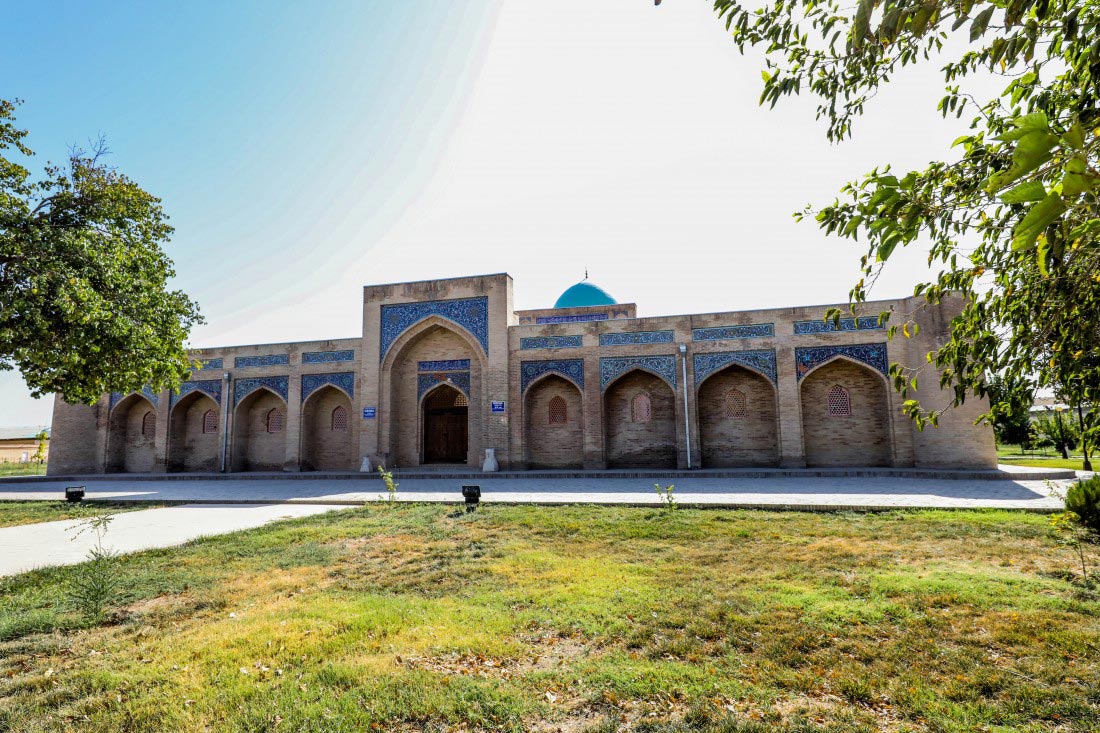
The Odina Madrasa, together with the mosque of the same name, forms a unique religious complex. Their principal distinguishing feature, setting them apart from all other religious buildings, is their exclusively female purpose. Only women studied sciences and religion in this special madrasa, and only women came to pray and give thanks to Allah in this distinctive mosque. These two institutions were the only ones of their kind in the whole of Central Asia, and no similar complexes existed anywhere else.
The location where they were built is also of particular interest. They were constructed on the site of the former karshi (palace) of Kebek Khan himself. This palace played an important role in the etymology of the name of the city of Karshi: it was thanks to it that the city came to be known by its present name. The madrasa and mosque were built in the 16th century at the corner of the Registan, the city’s main square. Over more than 500 years, the mosque underwent various changes and was even used as a prison. This occurred during the period of colonial conquests of Bukhara and its surrounding territories.
Today, the mosque houses a local history museum that расскаnts about the customs and traditions of that era, the Shaybanid dynasty that ruled these lands in the 16th century, and the great khans. The museum is open to tourists and all visitors. Particularly numerous among them are women who wish to walk upon this sacred ground, sanctified by the prayers of thousands of women over the centuries.
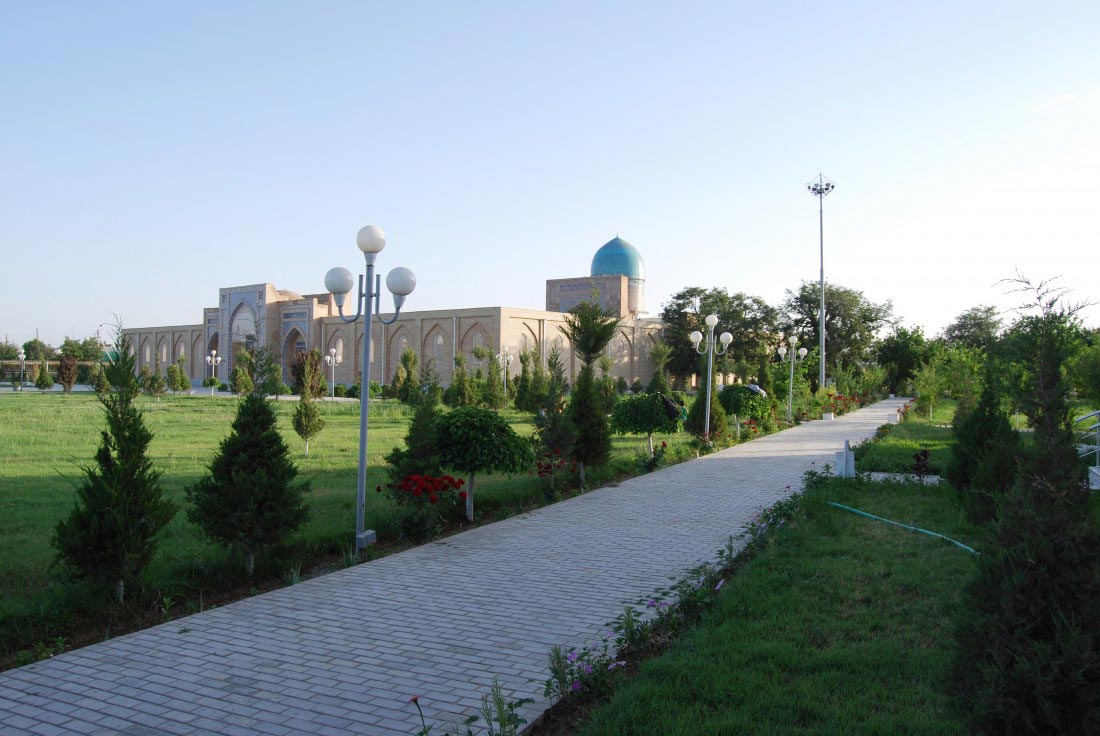
Kok-Gumbaz Mosque in Karshi
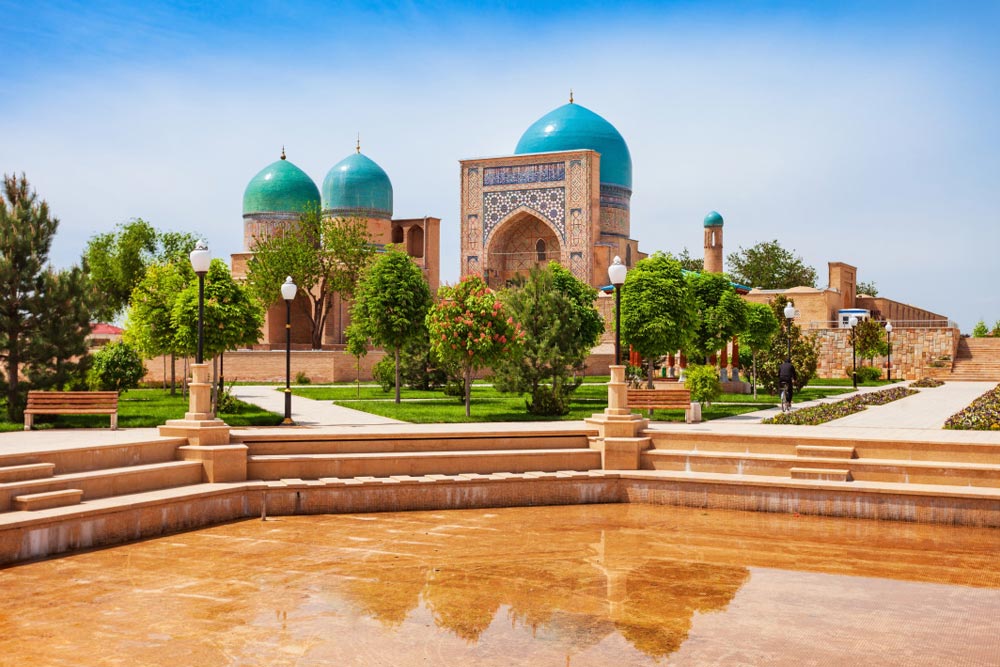
The largest and most beautiful mosque in the city is Kok-Gumbaz, built in the 16th century on the foundations of an even older Namazgoh mosque. The façade and interior of the mosque are decorated with glazed tiles (majolica) featuring traditional floral ornaments.
The Kok-Gumbaz Friday Mosque in Karshi, located near the city bazaar, is similar in design to the mosque of the same name in Shakhrisabz.
Useful to know:
Traditionally, in Mawarannahr (Transoxiana), mosques were divided by function and architectural form into three main types: neighborhood mosques intended for the five daily prayers of residents of a particular quarter; juma, or congregational mosques, designed for citywide Friday prayers; and festive mosques—namazgoh (also known as idgah or musalla)—used for communal prayers of the male population of the city and its surroundings twice a year during the holidays of Eid al-Fitr and Eid al-Adha.
In Karshi, one of the few surviving structures of this type is the 16th-century namazgoh mosque known as Kok-Gumbaz.
During that period, namazgoh mosques typically consisted of an arched gallery with a high central portal and a mihrab niche in the western wall. In front of the gallery there was usually an open square large enough to accommodate the entire male population of the city and its environs during festive prayers.